Better Results Through Better Analysis enabled by Standards
Cameron Shearon [Raytheon]
Abstract:
Having potential counterfeits in the supply chain complicates the performance of root cause failure analysis. Given that the typical failure analysis or counterfeit evaluation lab typically does not have a library of well-known-good parts to compare against the ones in question, having access to better historical production data and analytical tools can help fill that gap. In addition, as the pace of innovation and globalization has increased dramatically over time, the tools for performing failure analysis and ensuring that counterfeits do not inadvertently pollute any given supply chain have not kept pace with changing needs. Complicating this dynamic is that counterfeiters are accumulating more resources and becoming more sophisticated to avoid detection. In addition to individuals and private groups participating in the practice of developing counterfeits, the risk increases that governments can leverage undetected back doors to further their own global ambitions. Limiting the number of suppliers can provide short-term protection, but it does not fully protect the supply chain because of the indirect security measures in place. Obsolescence has also made the Failure Analysis and counterfeit evaluation increasingly more difficult to perform. Limiting the number of suppliers also incurs the additional cost of stifling innovation over time and artificially limiting competitive advantage.
Because the impacts to an individual, company, industry, and country can potentially be very harmful, along with the increased probability of counterfeits being injected insidiously into any given supply chain, it is imperative to proactively implement economically sustainable anticounterfeit tools that are scalable, create productivity gains, enable better failure analysis outcomes, and that are “future proof.” Fortunately, tools developed for a variety of other purposes can be easily applied to counterfeit materials, driving significant productivity gains across industries and economies. Coupling IPC-1782, Blockchain, Cloud, existing SMT & identification tools, simple in-situ risk decisions, Industry 4.0, IPC CFX (connected factory), Artificial Intelligence (AI), and Big Data Tools will proactively mitigate the risk of counterfeits, increase the trust and thus the speed of business, and enable faster, easier, & better failure analysis which improves the allocation of resources of every part of an organization. This approach will increase yields, quality, and reliability, as well as provide the basis for more effective product innovation that matches customers’ needs better and enables the pushing of the envelope of design rules, given the current tools.
Biography:
 Cameron Shearon is a Principal Materials Engineer in Raytheon’s Design & Development Northeast Section within the Materials & Process Engineering Department. In this role, he supports Requests for Quotes (RFQs) for Pentagon programs and contributes to a wide range of materials engineering initiatives.
He holds both a BS and MS in Materials Science and Engineering from North Carolina State University. Cameron initiated and co-chaired IPC 1782, the global component traceability standard. The standard defines four traceability levels for materials and four independent levels for processes, and it was completed in record time through the collaboration of numerous expert contributors, strong IPC staff support, and Cameron’s leadership. For his contributions, he received the IPC Committee Leadership Award at IPC APEX EXPO 2017.
Before joining Raytheon, Cameron owned Shearon-Consulting and was recognized as an SMTA Distinguished Speaker. Earlier in his career, he held a variety of engineering roles, including Process Engineer in a wafer fabrication facility, Failure Analysis Engineer, Product Safety Engineer in an R&D environment, Lead Quality Engineer with AT&T’s Global Supply Chain, and Reliability Engineer with AT&T Labs.
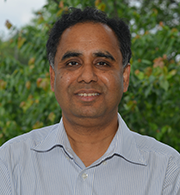
Dr. Diganta Das
For more information or questions regarding the technical program (including Professional Development Courses), contact the Conference Chair, Dr. Diganta Das

Kristin Nafstad
For more information or questions regarding event logistics, exhibitions, and sponsorship, contact Kristin Nafstad.
Top